Dispatch visibility
Clarify who needs immediate attention, what context the technician needs, and what follow-up is already owed.
HVAC teams need fast dispatch, clean service-agreement follow-up, and a better read on emergency and replacement cycles.
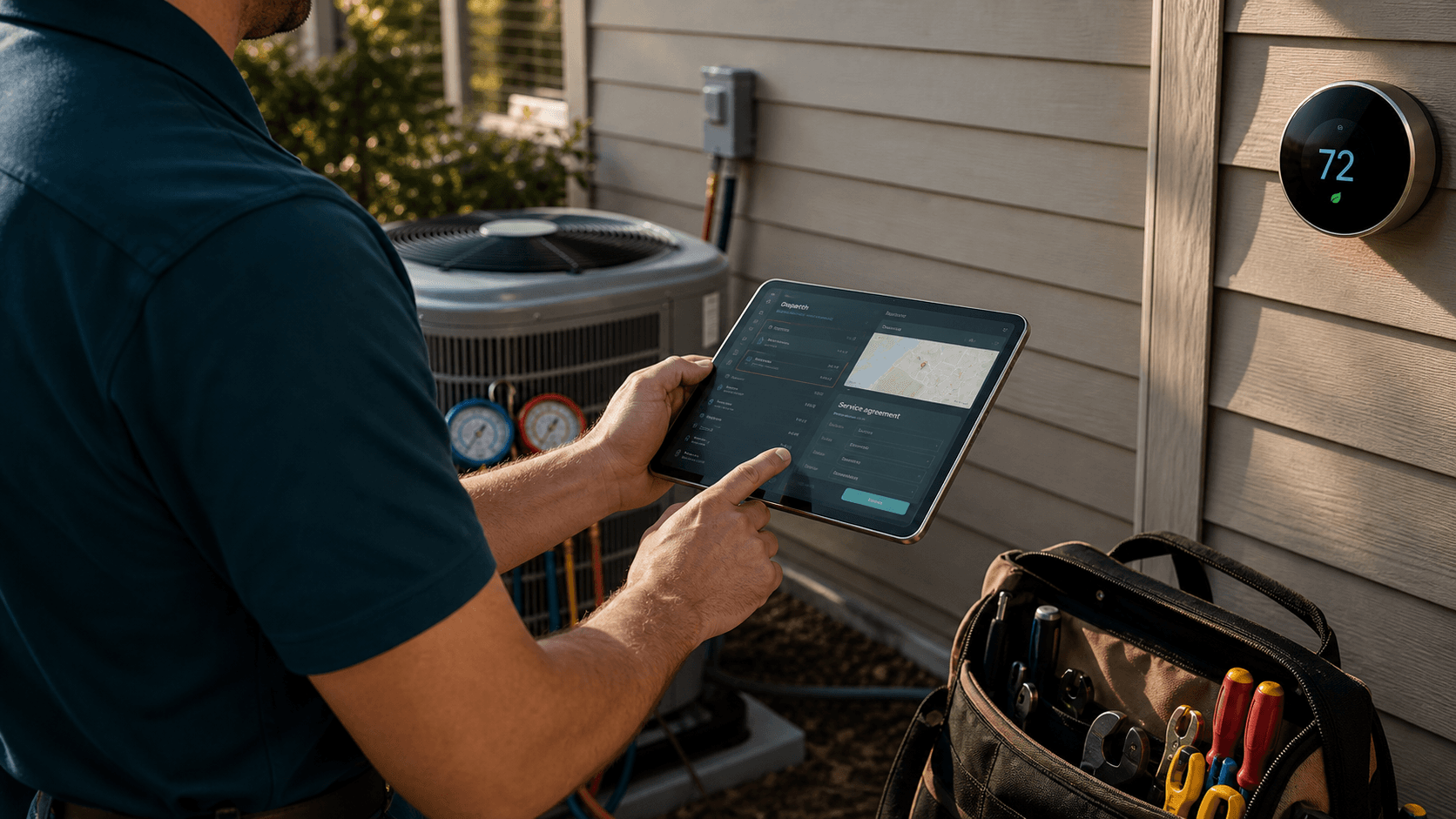
The goal is to keep urgent work, planned service, and long-cycle opportunities in the same operating view.
HVAC demand can move quickly when a system fails, then stretch into a longer trust cycle for maintenance, upgrades, and replacement.
Vertex helps organize the intake, agreement, follow-up, and replacement signals so the operator can see which motion the customer is actually in.
Clarify who needs immediate attention, what context the technician needs, and what follow-up is already owed.
Keep service agreements visible without turning the team into spreadsheet operators.
Flag repair history, timing, and customer context so long-cycle opportunities are handled with care.